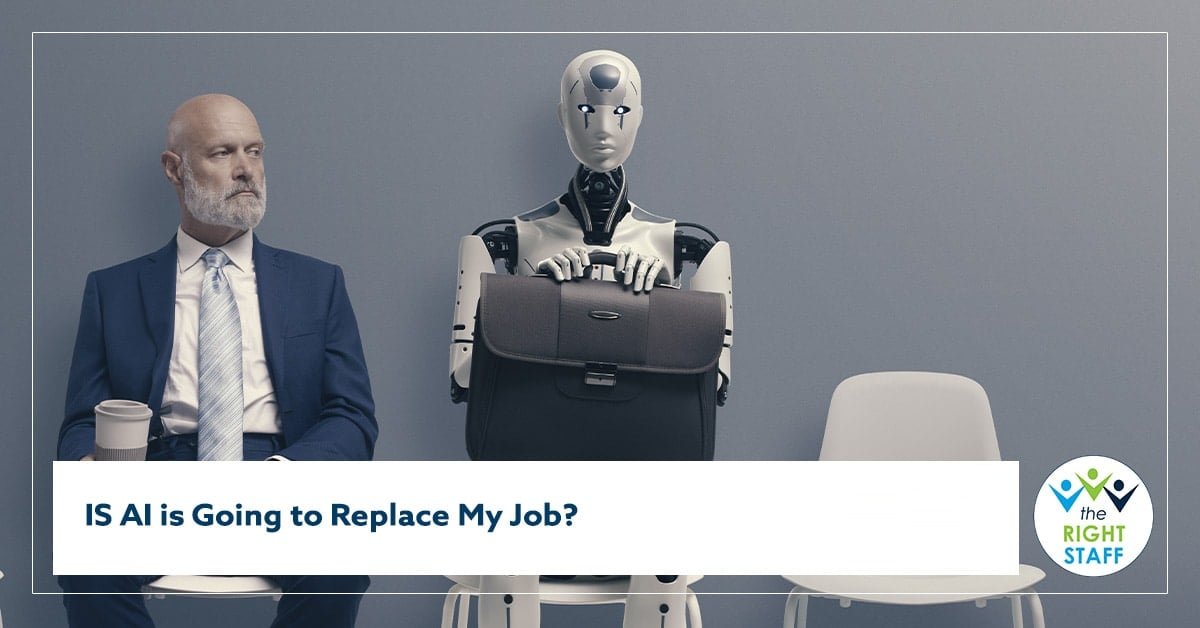
The question comes up in every industry, every job category, every career conversation. Some people are certain AI will automate everything within a decade. Others are equally certain their job requires human judgment that AI cannot replicate. Both camps are wrong in instructive ways. Here is what the research and evidence actually suggest – not the headlines, but the underlying analysis.
What the Research Shows
Goldman Sachs research estimated in 2023 that roughly 300 million jobs globally are exposed to some level of automation from AI. That number sounds alarming until you read what “exposed” means: some tasks within those jobs can be automated, not that the entire job disappears. A lawyer spends time on research, document review, and contract drafting – tasks where AI already assists. A lawyer also appears in court, negotiates, builds client relationships, and exercises judgment in ambiguous situations. The research task shrinks; the job changes but persists.
MIT economist David Autor, who has studied automation for decades, argues that technology consistently eliminates specific tasks rather than entire occupations. The ATM did not eliminate bank tellers – it eliminated routine cash dispensing, freeing tellers to spend more time on customer relationships and complex transactions. The number of bank tellers increased after ATMs were widely deployed. The nature of the job changed significantly; the job itself survived.
Which Jobs Are Most Exposed
Tasks most vulnerable to AI automation share certain characteristics: they involve processing text, images, or structured data according to patterns; the output quality can be evaluated objectively; the task does not require physical presence; and the domain knowledge required can be encoded in training data. This describes a significant portion of knowledge work: data entry, basic legal document review, standard accounting tasks, customer service for routine queries, basic graphic design, and first-draft writing.
Tasks least vulnerable involve: physical dexterity in unstructured environments (electricians, plumbers, surgeons performing novel procedures), genuine interpersonal judgment (therapists, negotiators, teachers managing classroom dynamics), creative work requiring original insight rather than pattern recombination, and decisions involving ethical or contextual judgment that cannot be reduced to rules.
The Pace of Change
Predictions about AI displacing jobs have consistently overestimated the pace of change. The practical barriers to automation are not just technical capability but legal liability, integration cost, institutional inertia, and trust. A hospital might use AI to draft discharge summaries, but a physician still signs them. A law firm might use AI for contract review, but a lawyer still bears professional responsibility for the output. These accountability structures slow the replacement curve significantly.
The Complementarity Argument
The most credible view among economists is not that AI replaces workers but that it changes what skilled workers produce. A programmer who uses GitHub Copilot writes more code per day. A writer who uses Claude produces more drafts. A financial analyst who uses AI tools analyzes more companies. Productivity rises; the number of workers needed for the same output may fall, but demand for the work itself often expands when it becomes cheaper. More code gets written when programmers become more productive; software ate the world precisely because its production cost kept falling.
What This Means Practically
The practical implication is not “my job will disappear” but “the mix of tasks in my job will shift.” The parts of your job that involve pattern-matching, information retrieval, and first-draft production will increasingly be assisted or automated. The parts that involve judgment, relationships, creativity, and accountability will become more valuable as the routine work gets offloaded. Professionals who learn to use AI tools effectively will produce more output than those who do not – creating a competitive advantage that is real and widening.
The skills worth developing are those that complement AI: critical evaluation of AI output, prompt engineering and AI tool fluency, domain expertise deep enough to catch AI errors, and the interpersonal and judgment skills that AI cannot replicate.
Will AI take your job? Probably not entirely, and probably not soon. Will AI change what you do, how you do it, and the value of different skills within your role? Almost certainly yes, and faster than most people expect. The most dangerous position is neither panic nor complacency – it is ignoring the change until the professional gap between AI-fluent and AI-avoidant workers becomes too wide to close quickly.