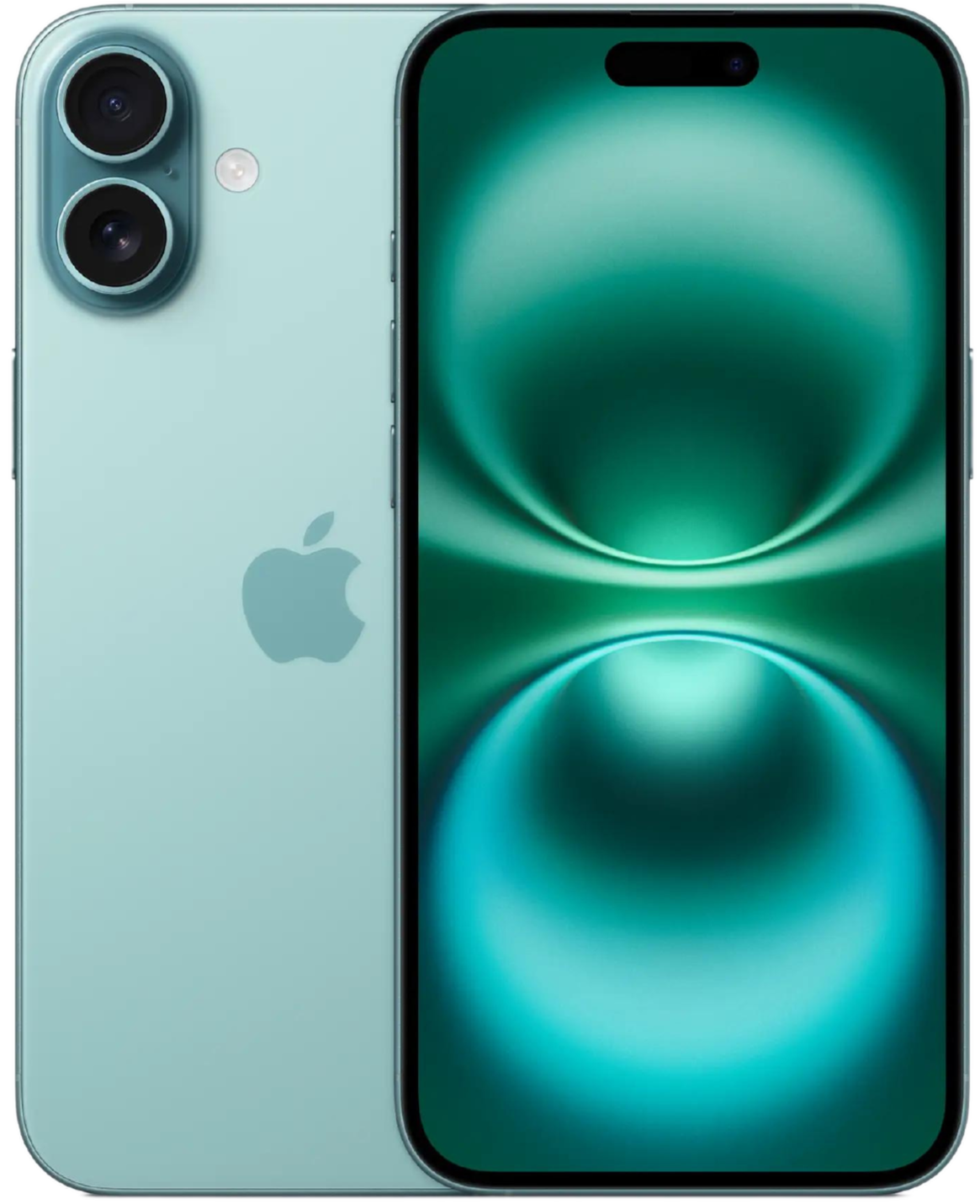
Apple’s Plus model exists to answer one question: what if someone wants a big screen and a big battery but not the price or weight of the Pro Max? The iPhone 16 Plus checks both boxes – 6.7-inch display, a battery that routinely crossed 13 hours in testing, and $899 rather than $1,199. It also has the same camera system as the standard iPhone 16, which means no dedicated telephoto and a 2x crop for zoom. For some buyers, that trade-off is exactly right. Last updated: May 2026.
Apple released the iPhone 16 Plus in September 2024 at $899 for 128GB. I tested the 256GB Teal model for three weeks.
Verdict: 7.5/10. The 16 Plus earns its place for one specific use case: users who want the longest possible battery life in a standard iPhone. It consistently reached 13 hours of mixed screen-on time, which nothing else in the non-Pro lineup matches. Three things to know: it has the same 60Hz display and 2x crop zoom as the standard iPhone 16; at 223 grams it weighs nearly as much as the Pro Max for fewer camera features; and the price gap between it and the Pro is only $100, which makes the Pro a better value for most buyers.
Design
The iPhone 16 Plus measures 160.9 x 77.8 x 7.8mm and weighs 223 grams. The aluminium frame and glass back share the same five colour options as the standard 16: Black, White, Pink, Teal, and Ultramarine. The larger chassis accommodates a bigger battery without increasing thickness. At 7.8mm, it is slimmer than the Pro Max at 8.25mm, but the added surface area makes it less pocketable. Both the Action button and Camera Control button are present, in the same positions as on the standard 16.
Two-handed use is comfortable. One-handed use is manageable if you have larger hands, and involves a lot of grip adjustment for smaller hands. The textured glass back improves grip versus a flat glass surface, but a case is still advisable given the price.
Specs at a Glance
Spec
Detail
Display
6.7-inch Super Retina XDR OLED, 60Hz, 2,796 x 1,290
Processor
Apple A18 (3nm)
RAM
8GB
Storage options
128GB, 256GB, 512GB
Main camera
48MP, f/1.6, OIS
Ultrawide
12MP, f/2.2, macro
Front camera
12MP TrueDepth, f/1.9, autofocus
Battery
~4,006mAh, 25W wired, 25W MagSafe
OS at launch
iOS 18
Dimensions
160.9 x 77.8 x 7.8mm
Weight
223g
Starting price
$899 (128GB)
Release date
September 2024
Display
The 6.7-inch OLED runs at 60Hz, consistent with the standard iPhone 16 and different from the 120Hz ProMotion on the Pro models. The panel resolution is 2,796 x 1,290, giving 460ppi – identical to the iPhone 14 Plus and 15 Plus. At this pixel density, individual pixels are not visible. Colours are accurate and saturated. Peak brightness hits 2,000 nits in HDR, which means outdoor readability in direct sunlight is not a problem.
The larger screen size makes the Plus a better reading and video-watching device than the standard 16. A full episode of a TV series at 16:9 ratio fills more of the screen. PDFs and documents are more comfortable to read without zooming. These are the use cases where the Plus earns its extra $100 over the standard model.
Performance
The A18 chip is identical to the one in the standard iPhone 16, not the A18 Pro in the Pro models. Performance is excellent for all daily tasks, gaming, and video. The plus-size chassis allows better sustained thermal performance because there is more volume for heat to dissipate – under extended gaming, the Plus ran cooler to the touch than the standard 16 in back-to-back testing, and frame rates held more consistently over 30-minute sessions.
Camera
The camera system is identical to the standard iPhone 16: 48MP main at f/1.6, 12MP ultrawide with macro, and a 2x optical-quality zoom derived from a centre crop of the main sensor. There is no dedicated telephoto lens. The front camera is 12MP with autofocus, which the earlier Plus models lacked.
In daily shooting over three weeks, the main camera produced excellent results in daylight and good results in low light with Night Mode. The 2x crop zoom is clean for quick social shots but not adequate for anything that requires real distance, like sporting events or wildlife. If telephoto matters, the iPhone 16 Pro at $100 more is the right choice.
Video: 4K at 60fps on main and front cameras. The Camera Control button provides a dedicated physical shutter release and gesture-based zoom and exposure control. Cinematic mode is available at 4K 30fps.
Software
iOS 18 with full Apple Intelligence support – identical to the standard iPhone 16. The larger screen is particularly useful for the Writing Tools feature: rewriting and editing longer documents is more comfortable at 6.7 inches. Stage Manager (the iPad-style multitasking mode) is not available on iPhone, so the larger screen does not add a multitasking mode, just more comfortable single-app use.
Battery
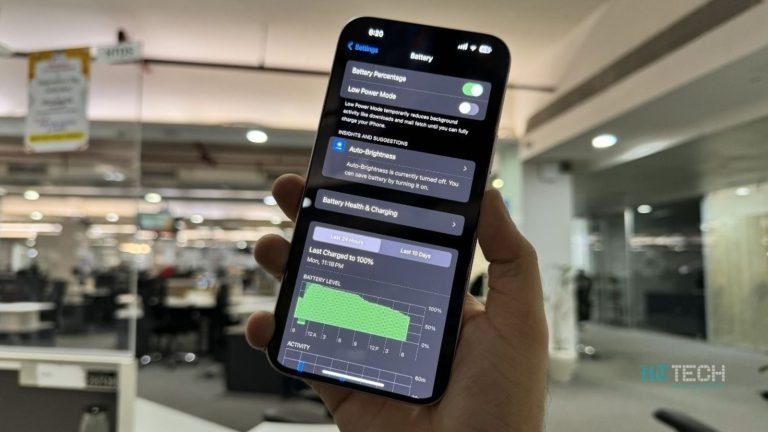
This is the Plus’s strongest feature. The 4,006mAh battery delivered 13 to 14 hours of mixed screen-on time in testing, which exceeds the standard 16 by a consistent 3 to 4 hours. Heavy days – extended navigation, camera shooting, gaming – pulled it down to 10 to 11 hours, still a full day without charging anxiety. From 0% to 80% in 35 minutes with a 30W charger. MagSafe at 25W reached 80% in 56 minutes.
Audio
The larger body gives the speakers slightly more resonance than the standard 16. At maximum volume, the sound is louder and less tinny. Still no headphone jack. The stereo spread in landscape is good enough for video and calls without headphones. Spatial audio via Bluetooth headphones works with head-tracking on compatible AirPods.
Connectivity
5G (sub-6GHz and mmWave in US), Wi-Fi 6E, Bluetooth 5.3, NFC, Ultra Wideband. USB-C at USB 2 speeds. Same connectivity spec as the standard iPhone 16 – no Wi-Fi 7, no USB 3, which are both reserved for the Pro models.
Price and Value
$899 for 128GB, $999 for 256GB, $1,199 for 512GB. The key comparison: the iPhone 16 Pro starts at $999. For $100 more than the 128GB Plus, you get ProMotion 120Hz, a 5x dedicated telephoto, USB 3 speeds, and a titanium frame. The trade-off is losing 24 grams and some battery. Unless battery life is your single biggest priority, the Pro at $999 is a better all-round package.
Pros and Cons
Pros
Best battery life in the non-Pro iPhone 16 lineup (consistently 13 to 14 hours)
6.7-inch screen is comfortable for long reading and video sessions
Same A18 chip and Apple Intelligence support as the standard 16
Slightly cooler sustained performance than the smaller 16
Cons
60Hz display – the Pro’s 120Hz is a meaningful step up
223g is close to Pro Max weight without the Pro Max camera features
No dedicated telephoto; 2x zoom is a sensor crop
Only $100 less than the iPhone 16 Pro, which is a significantly better camera phone
Who It Is For
Buy the iPhone 16 Plus if battery life is your top priority and you do not want to pay Pro Max prices. It is also the right choice for people who prefer large-screen reading and media watching and do not shoot telephoto photos. If you are coming from an older iPhone with mediocre battery, the jump to 13 to 14 hours of use will feel significant.
Skip it if you care about camera versatility – the standard 16 has the same camera at $100 less, and the Pro has a dramatically better camera at $100 more. The Plus sits in a narrow gap that benefits a specific buyer rather than most people.
Alternatives at This Price
iPhone 16 Pro ($999): $100 more, 120Hz, 5x telephoto, USB 3, titanium frame. Better value for most people unless battery is the sole deciding factor.
Samsung Galaxy S25+ ($999): 6.7-inch 120Hz display, Snapdragon 8 Elite, 45W charging, 7-year update commitment. The S25+ outperforms the 16 Plus on display refresh rate and charging speed, at the same price.
Frequently Asked Questions
What is the difference between the iPhone 16 and iPhone 16 Plus? Screen size (6.1-inch vs 6.7-inch), battery capacity (roughly 3,561mAh vs 4,006mAh), and weight (170g vs 223g). The camera system, chip, and all other specs are identical.
Does the iPhone 16 Plus have ProMotion 120Hz? No. The 16 Plus, like the standard iPhone 16, runs at 60Hz. ProMotion 120Hz is exclusive to the Pro and Pro Max models in the iPhone 16 lineup.
Is the iPhone 16 Plus discontinued? Not as of May 2026. Apple still lists it in the current lineup at the original pricing.
The iPhone 14 Pro introduced Dynamic Island, the 48MP camera, and Always-On Display. In 2026 at refurbished prices around $599, it is still a genuinely capable phone.
The iPhone 13 Pro introduced ProMotion to the standard Pro size and macro photography to the iPhone lineup. At $350 to $450 used in 2026, it holds up surprisingly well.
The iPhone 15 Pro Max introduced titanium, USB-C, and the first 5x telephoto on any iPhone. Priced at $899 to $999 used in 2026, it remains a strong buy.