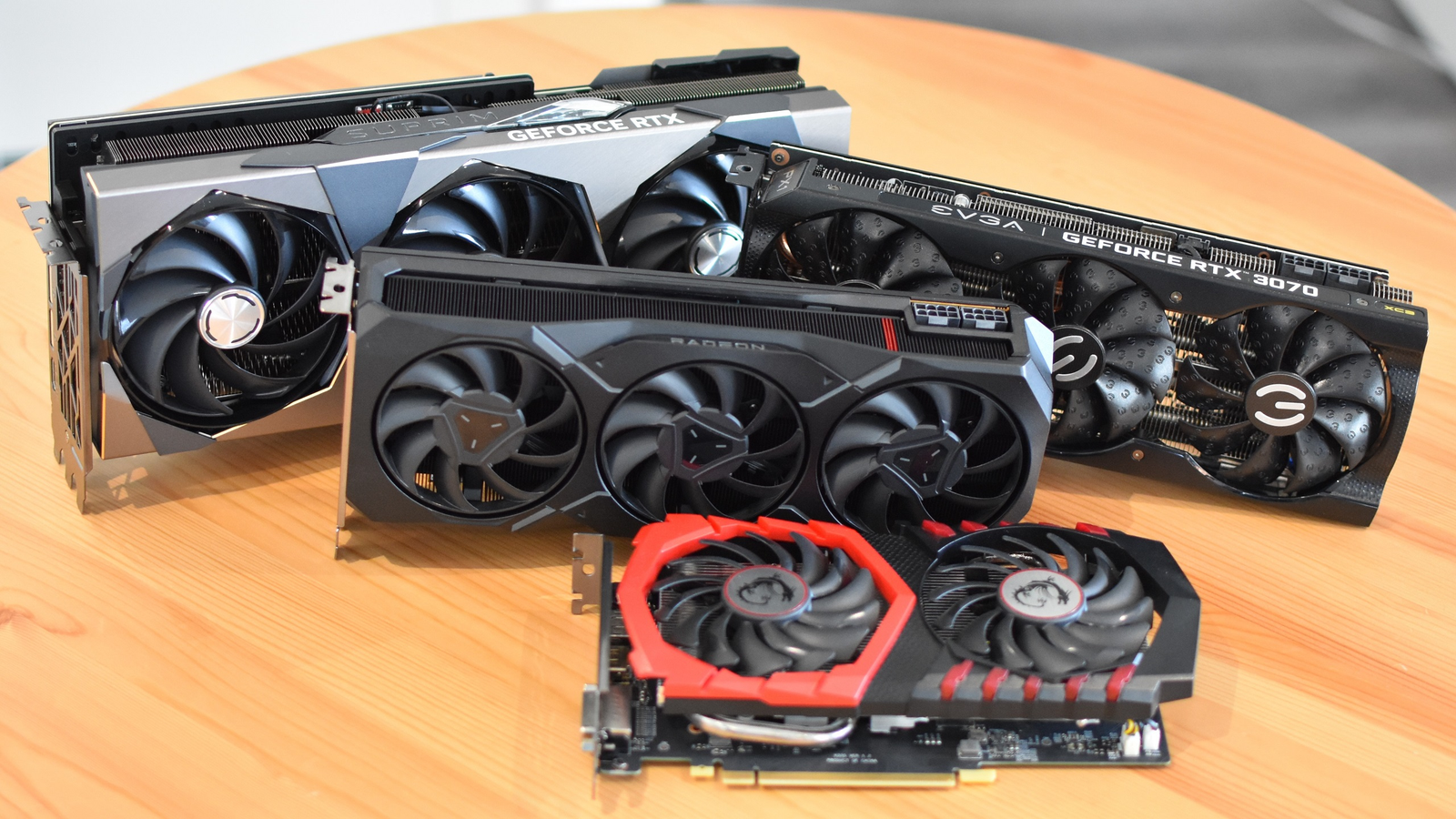
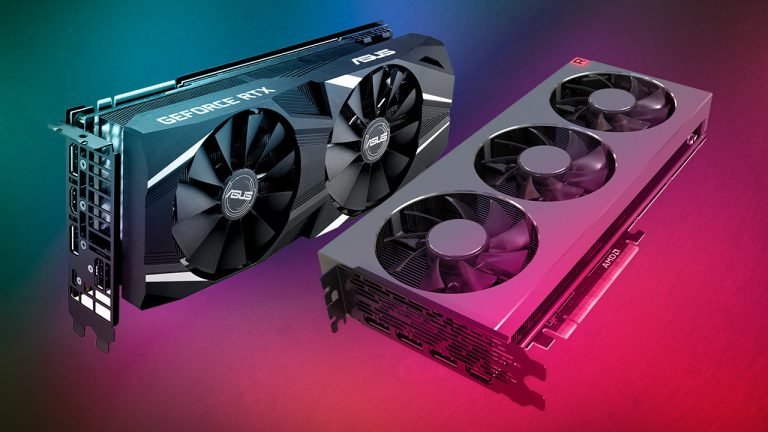
Choosing a graphics card in 2026 means navigating NVIDIA’s Blackwell RTX 5000 series and AMD’s RDNA 4 RX 9000 series launching simultaneously. This list ranks the best GPUs across all budgets based on price-to-performance ratio, VRAM capacity, and real-world gaming benchmarks at their target resolutions.
1. NVIDIA GeForce RTX 5070
The RTX 5070 at $499 hits the sweet spot for 1440p gaming. Built on Blackwell architecture, it delivers 90-120fps at High settings in most titles without upscaling. DLSS 4 with Frame Generation pushes that to 150-200fps when enabled. The card includes 12GB GDDR7 VRAM and substantially improved ray tracing cores over the previous generation.
This GPU suits enthusiast gamers who want high refresh rate 1440p without spending flagship prices. The 12GB VRAM may feel limiting in a few years for texture-heavy titles at higher resolutions, but for its target use case, the RTX 5070 delivers exceptional value.
2. AMD Radeon RX 9070
The RX 9070 launches at $449 with 16GB GDDR6 VRAM and RDNA 4 architecture. Raw rasterization performance lands 5-8% behind the RTX 5070, but the $50 savings and extra 4GB VRAM make it compelling. FSR 4 brings meaningful improvements to AMD’s upscaling technology, narrowing the gap with DLSS.
Gamers focused on raw frame rates without ray tracing will find the RX 9070 offers better price-per-frame than its NVIDIA competitor. The weaker ray tracing performance remains a drawback for those who prioritize visual fidelity in RT-enabled titles.
3. AMD Radeon RX 9060 XT
At $349, the RX 9060 XT targets 1440p gaming on RDNA 4 architecture. It packs 16GB GDDR6 VRAM – generous for this price segment – and delivers 60-90fps at High settings in demanding titles. FSR 4 support helps push frames higher when needed.
Budget-conscious 1440p gamers get excellent value here. The 16GB buffer provides headroom for future titles and higher texture packs. Ray tracing performance remains limited compared to NVIDIA alternatives, so those features should not factor into this purchase decision.
4. NVIDIA GeForce RTX 5060 Ti
The RTX 5060 Ti retails at $379 and brings Blackwell architecture to the mid-range. DLSS 4 Frame Generation works well for boosting frame rates in supported titles, and ray tracing capability exceeds AMD’s offerings at this price. The card ships with 8GB GDDR7 VRAM.
This card fits gamers who value NVIDIA ecosystem features like DLSS, NVENC encoding, and better ray tracing over raw specifications. The 8GB VRAM limitation may cause issues in VRAM-hungry titles at 1440p with maximum textures enabled.
5. NVIDIA GeForce RTX 5070 Ti
The RTX 5070 Ti at $749 bridges the gap between mainstream and enthusiast tiers. It handles 4K gaming at 60-80fps on High settings without upscaling, or smooth 120fps+ at 1440p. The 16GB GDDR7 VRAM addresses memory concerns, and DLSS 4 extends performance further in supported games.
High refresh rate 1440p and entry-level 4K gamers benefit most from this tier. The price jump from the RTX 5070 feels steep for the 25-30% performance gain, making value-focused buyers better served by the standard 5070.
6. AMD Radeon RX 7600 XT
The RX 7600 XT at $229 stands as the best new GPU under $250. Its 16GB GDDR6 VRAM is remarkable at this price point, and RDNA 3 architecture handles 1080p gaming at medium-to-high settings comfortably. FSR 3 upscaling extends its capabilities to 1440p at reduced settings.
First-time PC builders and budget gamers get strong 1080p performance without compromise. The card struggles with ray tracing and cannot match newer RDNA 4 efficiency, but pure rasterization value at this price remains unmatched by any new GPU.
7. NVIDIA GeForce RTX 4060 (Used)
Used RTX 4060 cards sell between $220-$240 and provide access to DLSS 3 Frame Generation. The 8GB GDDR6 VRAM handles 1080p well, and Ada Lovelace architecture delivers solid efficiency. Ray tracing performance exceeds AMD competitors in this segment.
Buyers comfortable with the used market can access NVIDIA’s ecosystem at budget prices. The 8GB VRAM increasingly limits performance in newer titles, and buying used carries inherent warranty and condition risks that new cards avoid.
8. AMD Radeon RX 9070 XT
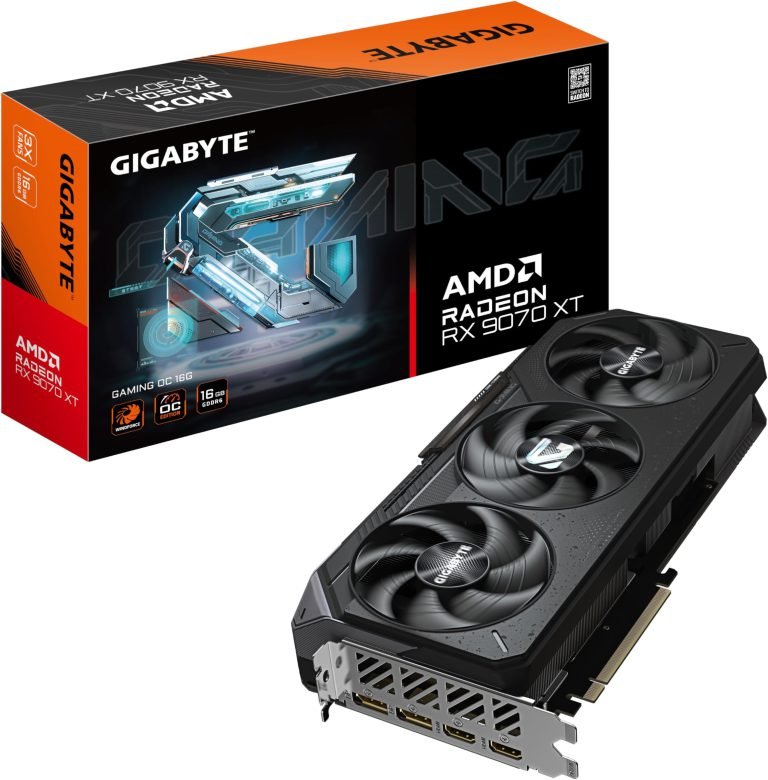
The RX 9070 XT at $549 pushes RDNA 4 toward enthusiast territory. Expect 4K gaming at 50-70fps on High settings or smooth 100-140fps at 1440p. The 16GB GDDR6 VRAM handles demanding workloads, and FSR 4 provides reliable upscaling when frames need boosting.
Gamers seeking near-flagship AMD performance get strong value against NVIDIA’s higher-priced alternatives. Ray tracing remains a generation behind NVIDIA, making this card better suited for rasterization-focused players.
9. NVIDIA GeForce RTX 5080
At $999, the RTX 5080 delivers true 4K gaming performance. Native 4K at 80-100fps on High settings comes standard, with DLSS 4 pushing past 144fps in many titles. The 16GB GDDR7 VRAM and advanced ray tracing make this the card for high-end gaming without reaching flagship prices.
Enthusiasts with 4K 120Hz+ displays and deep budgets find their match here. The $500 premium over the RTX 5070 Ti delivers roughly 35-40% more performance – reasonable for those who demand maximum visual quality.
10. NVIDIA GeForce RTX 5090
The flagship RTX 5090 at $1,999 represents uncompromised performance. Native 4K at 120fps+ becomes achievable in demanding titles, and 32GB GDDR7 VRAM handles any workload. Ray tracing performance matches or exceeds previous-generation rasterization, and DLSS 4 pushes frames into absurd territory.
Content creators needing GPU compute and gamers with unlimited budgets get the fastest consumer card available. The price places it firmly in diminishing returns territory for pure gaming – the RTX 5080 delivers 70% of the performance at half the cost.
Bottom Line: The RTX 5070 at $499 and RX 9070 at $449 offer the best value for most gamers targeting 1440p high refresh rate gaming. Budget buyers should consider the RX 7600 XT at $229, while those with deeper pockets will find the RTX 5080 at $999 handles 4K without compromise.
The best NVMe SSDs in 2026 are faster than ever. Our roundup tests the top options at Gen 4 and Gen 5 speeds for gaming, creative work, and everyday use.
GPUs power gaming, AI, and video editing. This explainer covers how a graphics card actually works, why GPUs are so much better at parallel tasks than CPUs, and what VRAM does.
Air cooler or AIO liquid cooler? Our 2026 guide compares performance, noise, cost, and reliability to help you choose the right cooling for your PC build.