The Samsung Galaxy S25 Ultra did something with its S Pen in 2025 that Samsung has never done before: made it faster to use than a finger. The latency from pen tip to screen response dropped to 2.8ms on the S25 Ultra – down from 9ms on the S24 Ultra – which crosses a threshold where the delay is imperceptible to human cognition. Writing notes on this phone feels like writing on paper in a way it has not on any previous Galaxy Note or Ultra model. Samsung released the S25 Ultra in January 2025 starting at $1,299. I tested the 256GB Titanium Silverblue model for six weeks. Last updated: May 2026.
Verdict: 9/10. The Galaxy S25 Ultra is Samsung’s most refined Ultra yet. The Snapdragon 8 Elite chip, 200MP camera, improved S Pen, and seven-year update commitment make a strong case for $1,299. Three things to know: the titanium frame is less grippy than the previous aluminium; battery charging at 45W is competitive but not the fastest at this price; and Galaxy AI’s cloud-dependent features require a Samsung account and periodic consent confirmations that feel intrusive.
Design
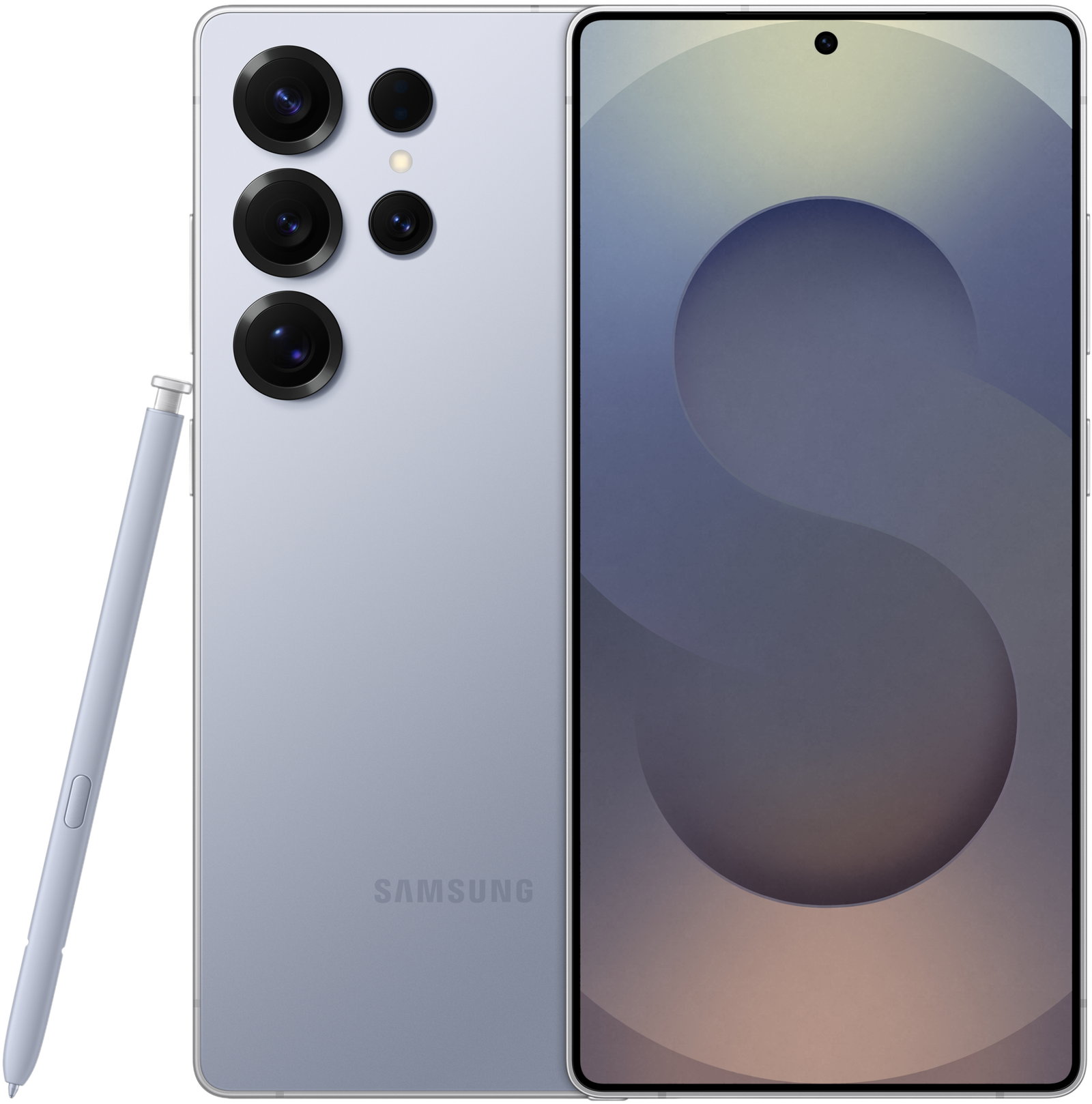
The S25 Ultra measures 162.8 x 77.6 x 8.2mm and weighs 218 grams – lighter than the iPhone 16 Pro Max at 227g despite a slightly taller body. The frame is titanium (matching Samsung’s upgrade from aluminium on the S24 Ultra), flat on all four sides, and available in Titanium Silverblue, Titanium Black, Titanium White Silver, and Titanium Gray. The flat sides and squared corners make the phone feel stable on a table but slightly harsh in the hand over long sessions compared to rounded designs.
The S Pen slot sits in the bottom-left corner. The pen ejects and retracts with a satisfying click. The Armour Aluminum front and back are covered by Corning Gorilla Armor 2, which reduces glare rather than just providing impact resistance. In direct sunlight, the anti-reflective coating reduces glare noticeably compared to standard glass phones. IP68 water resistance rating.
Specs at a Glance
Spec
Detail
Display
6.9-inch Dynamic AMOLED 2X, 120Hz, 3,088 x 1,440
Processor
Snapdragon 8 Elite (3nm)
RAM
12GB
Storage options
256GB, 512GB, 1TB
Main camera
200MP, f/1.7, OIS
Ultrawide
50MP, f/1.9
Telephoto 1
10MP, 3x optical, f/2.4
Telephoto 2
50MP, 5x optical, f/3.4 (periscope)
Front camera
12MP, f/2.2
Battery
5,000mAh, 45W wired, 15W wireless
S Pen
Built-in, 2.8ms latency
OS at launch
Android 15, One UI 7
Update commitment
7 years OS and security
Dimensions
162.8 x 77.6 x 8.2mm
Weight
218g
Starting price
$1,299 (256GB)
Release date
January 2025
Display
The 6.9-inch Dynamic AMOLED 2X panel runs at up to 120Hz with an adaptive rate that drops to 1Hz for static content. Resolution is 3,088 x 1,440 – higher than the iPhone 16 Pro Max’s 2,868 x 1,320 at the same screen size. Peak brightness: 2,600 nits, higher than any current iPhone. In direct sunlight, the S25 Ultra is the most readable phone in this comparison – the high brightness and Gorilla Armor anti-reflective coating combine to make outdoor use comfortable in conditions that require shade on most phones.
Colour accuracy is excellent in Natural mode. The default Vivid mode saturates colours beyond what is technically accurate, which most people prefer for media consumption but which photographers editing on-device should switch off. The Always-On Display shows clock, date, notifications, and S Pen shortcuts.
Performance
Snapdragon 8 Elite, 12GB RAM. Geekbench 6 multi-core averages around 7,800 – behind the Apple A18 Pro’s 8,500 but ahead of every other Android chip available. The 12GB of RAM means app retention is excellent: apps open in the background stay in memory longer than on the iPhone 16’s 8GB configuration. Gaming performance is excellent across all current Android titles at maximum settings. Under sustained load (30-minute gaming sessions), the phone ran warm but not uncomfortably so, and performance held without throttling.
Camera
Four cameras: 200MP main (f/1.7), 50MP ultrawide (f/1.9), 10MP 3x telephoto (f/2.4), and 50MP 5x periscope telephoto (f/3.4). The 200MP main sensor shoots at 12MP by default using pixel binning, or 50MP and 200MP in expert modes. The full 200MP output produces files of 30 to 50MB that resolve extraordinary detail in daylight – visible when zoomed at 1:1 on a large monitor.
The 5x periscope telephoto is where the S25 Ultra consistently outperforms the iPhone 16 Pro Max: at 10x digital zoom from the 5x periscope, the S25 Ultra retains more detail and less noise than the iPhone’s 10x digital zoom from a 5x telephoto. At 30x space zoom, the S25 Ultra produces recognisable (if noisy) images; the iPhone 16 Pro Max at 30x is not usable. For extreme zoom photography, the S25 Ultra wins clearly.
Low-light main camera performance matches the iPhone 16 Pro Max in most conditions. Night Mode on the S25 Ultra occasionally over-processes, adding a watercolour smearing effect to details in very dark scenes that the iPhone avoids. Video: 8K at 30fps, 4K at 120fps. The video colour science on the S25 Ultra is more saturated than the iPhone’s by default.
S Pen
The S Pen at 2.8ms latency is the main practical upgrade over the S24 Ultra. In Note taking, sketching, and PDF annotation, the pen feels immediate in a way that eliminates the “I’m writing on a screen” awareness that higher-latency stylus implementations never fully resolve. Pressure sensitivity and tilt response are consistent across the full writing area. The S Pen stores inside the phone, charges wirelessly in the slot, and ejects by pressing the tip of the slot. There is no Bluetooth S Pen air gesture on the S25 Ultra – Samsung removed this feature from the S25 series.
Software
Android 15 with One UI 7 and Galaxy AI. Samsung’s AI features include Live Translate (real-time call translation), Transcript Assist, Circle to Search (highlight anything on screen to search it), and Note Assist. Galaxy AI’s most useful features are Circle to Search – now available without lifting the phone, just draw a circle around any image or text – and Live Translate, which handles 16 languages. AI features that require Samsung’s servers are noted with a cloud icon; those that run on-device do not require a network connection.
Seven years of OS and security updates is Samsung’s strongest software commitment yet and now matches or exceeds Apple’s typical support window. One UI 7 reduced the notification clutter of earlier One UI versions and tightened the visual design. Pre-installed apps include Samsung’s own versions of several Google apps; disabling rather than deleting them is required for some, which is a minor friction.
Battery
5,000mAh battery delivers 12 to 13 hours of mixed screen-on time in daily use – ahead of the iPhone 16 Pro Max. Charging at 45W wired reaches 80% in 36 minutes. Wireless charging at 15W is slower than MagSafe at 25W on iPhone 16 Pro. Reverse wireless charging at 4.5W can charge the Galaxy Buds placed on the back of the phone. The 45W charging speed is competitive but not class-leading – phones like the OnePlus 13 charge at 80W to 100W, reaching 80% in 20 minutes.
Audio
Stereo speakers with Dolby Atmos – louder and with more bass presence than the iPhone 16 Pro Max. Samsung’s partnership with AKG for speaker tuning produces a wider stereo separation in landscape orientation. No headphone jack. USB-C audio with a USB-C to 3.5mm adapter. Bluetooth 5.4.
Connectivity
5G (sub-6GHz and mmWave), Wi-Fi 7, Bluetooth 5.4, NFC, UWB. USB-C at USB 3.2 speeds. The Wi-Fi 7 and USB 3.2 specifications match the iPhone 16 Pro. Satellite connectivity (Emergency SOS) is not available on the S25 Ultra in all markets – check availability for your region before purchasing.
Price and Value
$1,299 for 256GB, $1,419 for 512GB, $1,659 for 1TB. The S25 Ultra is $100 more than the iPhone 16 Pro Max at the same storage tier. The premium over the iPhone buys: 12GB RAM vs 8GB, the S Pen, 7-year update commitment, and the 200MP sensor with superior extreme zoom. The iPhone wins on video quality and ecosystem integration for Mac users. At this price, the choice comes down to the S Pen and your existing ecosystem.
Pros and Cons
Pros
S Pen at 2.8ms latency is the best stylus experience on any phone
2,600 nit peak brightness – the most readable outdoor display in this comparison
200MP sensor and periscope telephoto lead at extreme zoom distances
7-year OS and security update commitment
12GB RAM improves multitasking app retention
Cons
15W wireless charging is slower than iPhone 16’s 25W MagSafe
Galaxy AI cloud features require Samsung account and data consent
Flat titanium sides feel less comfortable over extended sessions than rounded designs
No Bluetooth S Pen air gestures (removed in S25 series)
Who It Is For
The S25 Ultra is the right phone if you take notes or sketch regularly (the S Pen at 2.8ms latency is the strongest reason to own this phone), if you need extreme zoom camera capability, or if you want the longest guaranteed OS support of any phone available in 2026. It is also the flagship for Android users who want the best available hardware without considering iPhone.
Alternatives
iPhone 16 Pro Max ($1,199): Better video quality, Apple ecosystem integration, 25W MagSafe. The choice if you are in the Apple ecosystem and do not use a stylus.
Google Pixel 9 Pro XL ($1,099): Strongest AI photo processing, 7-year updates, $200 cheaper. Choose it over the S25 Ultra if the S Pen is not a factor.
Frequently Asked Questions
Does the Samsung Galaxy S25 Ultra still have an S Pen? Yes. The S Pen is built into the phone and ejects from the bottom-left corner. Samsung did not remove the S Pen from the S25 Ultra, though there were pre-launch rumours suggesting it might. The pen latency improved from 9ms on the S24 Ultra to 2.8ms on the S25 Ultra.
Does the Galaxy S25 Ultra support Wi-Fi 7? Yes. Wi-Fi 7 (802.11be) is supported, matching the iPhone 16 Pro models. Real-world benefits require a Wi-Fi 7 router.
How long will Samsung support the Galaxy S25 Ultra? Samsung has committed to 7 years of OS updates and security patches from the January 2025 release date, meaning support through approximately 2032.
The Galaxy A55 brings an Exynos 1480, 50MP camera, IP67, and four years of OS updates to the $449 mid-range tier. Samsung’s most compelling A-series phone in years.
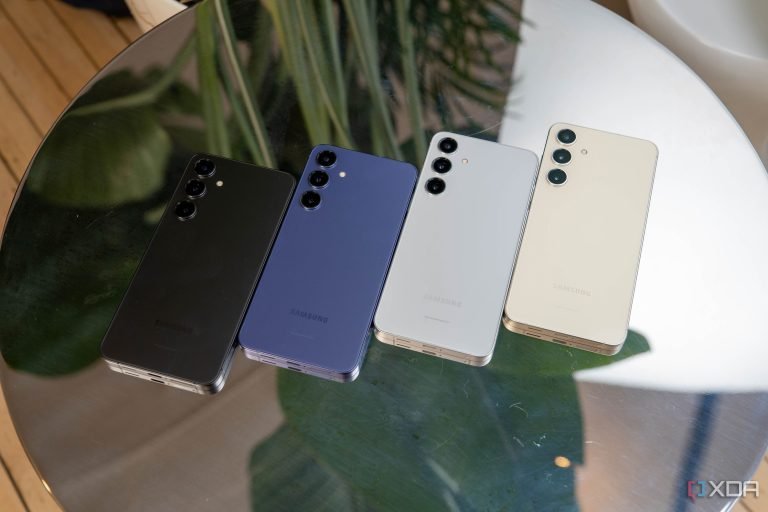
The Galaxy S25+ sits between the standard S25 and the Ultra at $999. At 190g with a 6.7-inch display and 45W charging, it is the Galaxy most people should actually buy.
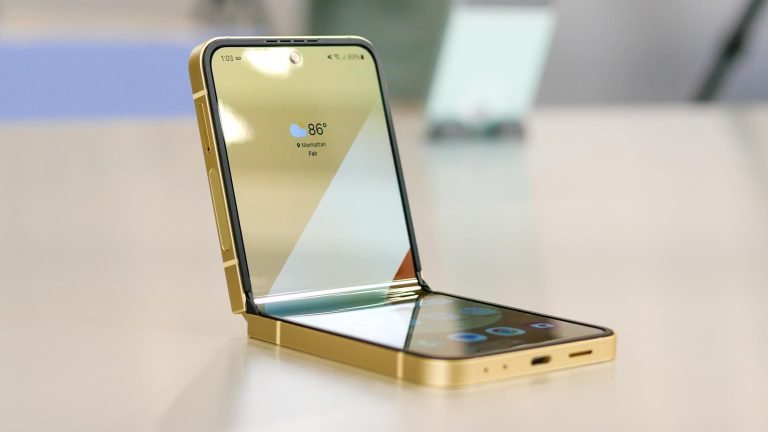
The Galaxy Z Flip 6 folds to jacket-pocket size and opens to a 6.7-inch screen. At $1,099, it is the most stylish phone Samsung sells, with trade-offs to match.
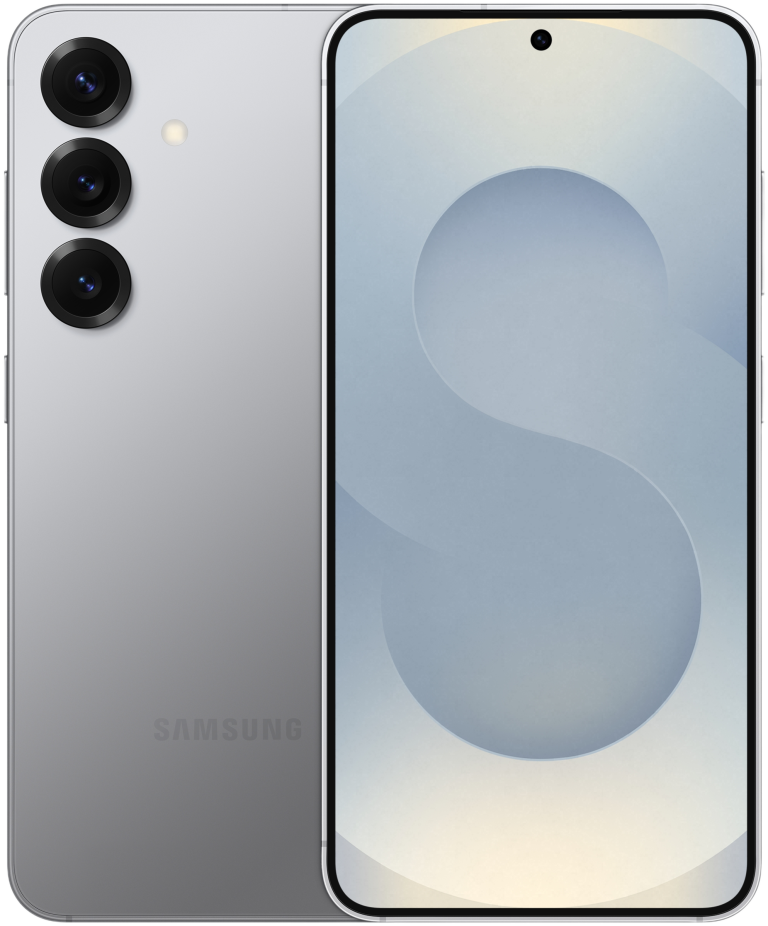
The Galaxy S25 packs the Snapdragon 8 Elite, 50MP triple camera, and 7-year updates into a $799 package. It is lighter than the iPhone 16 Pro and matches it on most spec sheets.