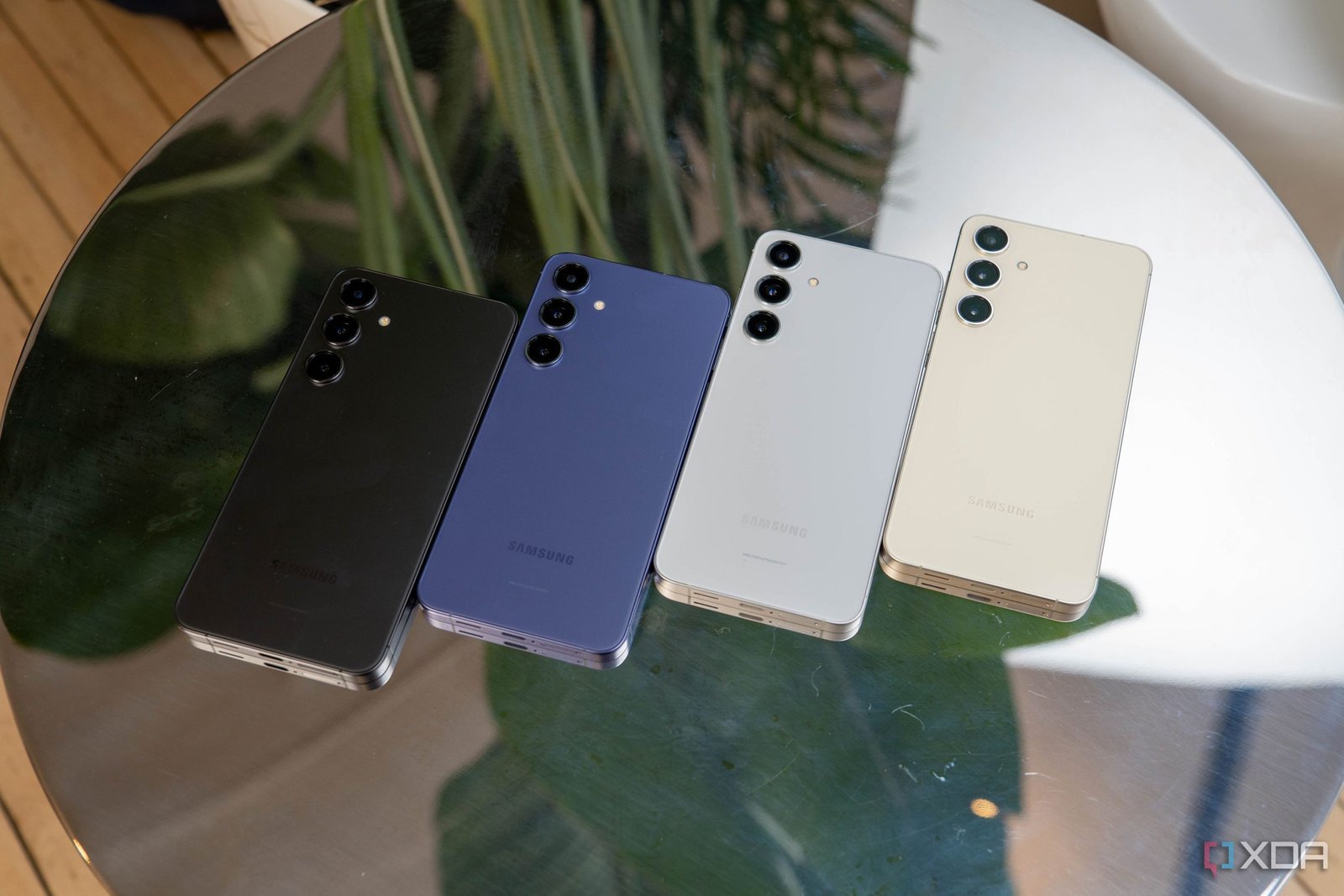
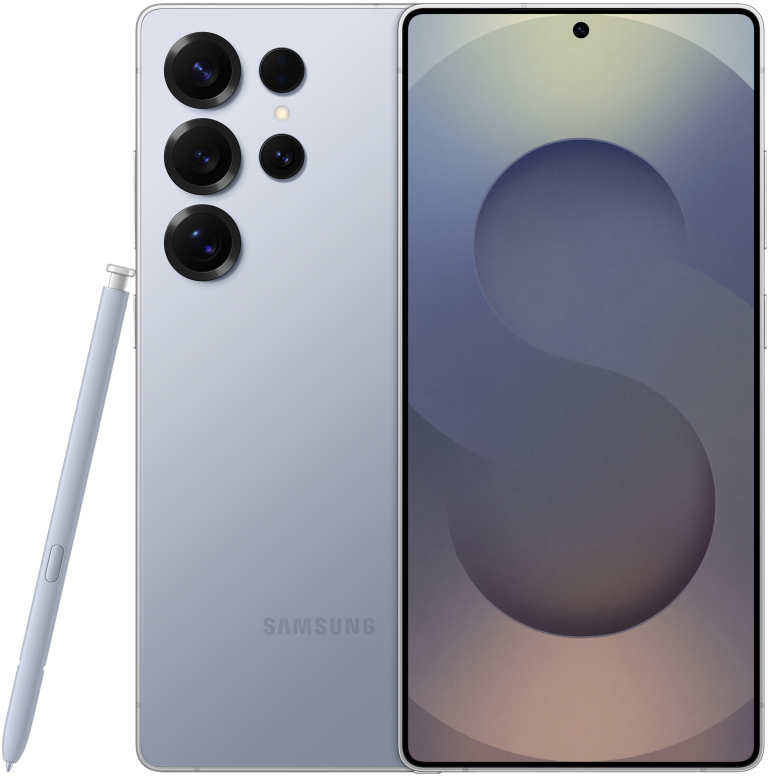
The Galaxy S25+ launches every January to less attention than the Ultra and the standard S25, which is a predictable outcome when the middle model in a three-phone lineup has no flagship-defining feature and no budget appeal. What it does have: the same Snapdragon 8 Elite chip as the Ultra, a 6.7-inch 120Hz display, a 4,900mAh battery, and 45W charging in a 190-gram body. Samsung released it in January 2025 at $999. I tested the 256GB Icy Blue model for four weeks. Last updated: May 2026.
Verdict: 8.5/10. The S25+ is the Galaxy I would buy if I were not specifically drawn to the S Pen or the Ultra’s extreme zoom. The performance is identical to the Ultra, the display is excellent, and 190g is lighter than any competing large-screen flagship. Three things to know: it shares the same triple camera as the S25 standard (no periscope telephoto); wireless charging is 15W (slower than it should be at this price); no S Pen.
Design
The S25+ measures 158.0 x 75.8 x 7.3mm and weighs 190 grams. The 7.3mm thickness is the slimmest of the S25 lineup. The Armour Aluminium frame and glass back with Gorilla Glass Victus 2 on the front feel premium without the aggressive squared edges of the Ultra. Four colours: Icy Blue, Mint, Navy, and Silver Shadow. No S Pen slot – the S Pen is exclusive to the Ultra model.
Specs at a Glance
Spec
Detail
Display
6.7-inch Dynamic AMOLED 2X, 120Hz, 3,088 x 1,440
Processor
Snapdragon 8 Elite (3nm)
RAM
12GB
Storage options
256GB, 512GB
Main camera
50MP, f/1.8, OIS
Ultrawide
12MP, f/2.2
Telephoto
10MP, 3x optical, f/2.4
Front camera
12MP, f/2.2
Battery
4,900mAh, 45W wired, 15W wireless
OS at launch
Android 15, One UI 7
Update commitment
7 years
Dimensions
158.0 x 75.8 x 7.3mm
Weight
190g
Starting price
$999 (256GB)
Release date
January 2025
Display
The 6.7-inch Dynamic AMOLED 2X panel runs at up to 120Hz adaptive and hits 2,600 nits peak brightness – the same panel specification as the S25 Ultra scaled to the smaller body. In daily use, the display is one of the two best 6.7-inch screens available in 2026, alongside the iPhone 16 Pro Max. Colour accuracy in Natural mode is excellent. Gorilla Glass Victus 2 on the front; the anti-reflective Gorilla Armor of the Ultra is not present here.
Performance
Snapdragon 8 Elite with 12GB RAM – identical to the S25 Ultra. Geekbench 6 multi-core around 7,800. In a thinner and lighter chassis, the S25+ ran slightly cooler under sustained load than the Ultra – the slimmer body allows heat to reach the surface faster, which keeps the chip’s thermal throttling ceiling further away. Gaming at maximum settings on current Android titles ran at consistent frame rates over 20-minute sessions.
Camera
50MP main (f/1.8), 12MP ultrawide (f/2.2), 10MP 3x telephoto (f/2.4). The camera system is different from the Ultra’s – no 200MP sensor, no periscope 5x telephoto. The 50MP main sensor produces excellent photos in daylight and capable low-light shots. At 3x zoom the dedicated telephoto is sharp; beyond 3x, digital zoom quality drops quickly without the periscope to extend the range cleanly. For most photography – portraits, landscapes, events, travel – the S25+ camera is excellent. The limitation only shows if you regularly photograph subjects at distance or need extreme zoom.
Video: 8K at 30fps and 4K at 60fps on the main camera. Galaxy AI ProVisual engine applies per-scene processing that improves detail in challenging lighting. Low-light video is competitive with the iPhone 16 Pro at standard recording settings.
Software
Android 15 with One UI 7 and the full Galaxy AI suite – identical to the Ultra. Seven-year update commitment. The same Circle to Search, Live Translate, and Note Assist AI features are present. One UI 7 is Samsung’s cleanest software release in years – the visual design is more consistent and the notification management less overwhelming than One UI 6.
Battery
4,900mAh battery delivered 12 to 13 hours of mixed screen-on time – essentially matching the S25 Ultra despite a smaller capacity, likely due to the thinner chassis’s better thermal management allowing the chip to run more efficiently. Charging: 45W wired (0% to 80% in 38 minutes). Wireless: 15W – slower than MagSafe on the iPhone 16 Pro at 25W.
Audio
Stereo speakers with Dolby Atmos, tuned by AKG. Similar output to the S25 Ultra – loud and clear with a reasonable stereo image in landscape. No headphone jack. USB-C 3.2.
Connectivity
5G (sub-6GHz and mmWave in US), Wi-Fi 7, Bluetooth 5.4, NFC, UWB. USB-C at USB 3.2 speeds. Full connectivity parity with the Ultra except for the Gorilla Armor anti-reflective coating on the display glass.
Price and Value
$999 for 256GB, $1,119 for 512GB. Compared to the S25 Ultra at $1,299: saving $300 buys you the same chip, same display technology, same software, and similar battery life – losing the 200MP sensor, periscope telephoto, S Pen, and Gorilla Armor glass. For users who do not use the S Pen and do not shoot at extreme zoom, the S25+ is $300 better value than the Ultra.
Pros and Cons
Pros
190g is the lightest large-screen flagship in this comparison
Snapdragon 8 Elite with 12GB RAM – full flagship performance
7.3mm slim profile without thermal compromises
7-year update commitment
$300 cheaper than the S25 Ultra for comparable everyday performance
Cons
15W wireless charging – slower than MagSafe at this price tier
No periscope telephoto (3x max dedicated telephoto)
No S Pen
12MP ultrawide is behind the 50MP ultrawide on the Ultra
Who It Is For
The S25+ is the right Galaxy for most Android buyers who want a large screen, flagship performance, and long software support without the S Pen tax or the Ultra’s premium. It is lighter than every competing large-screen Android flagship and costs $300 less than the Ultra for nearly identical daily performance. If you do not take notes with a stylus and do not shoot extreme zoom, the S25+ is objectively the better allocation of $1,000 in the Samsung lineup.
Alternatives
Samsung Galaxy S25 Ultra ($1,299): S Pen, 200MP camera, periscope 5x telephoto. Spend the $300 more only if those specific features matter.
iPhone 16 Pro ($999): Same starting price, 5x telephoto, iOS ecosystem, 25W MagSafe. The comparison that will decide most dual-platform buyers.
Frequently Asked Questions
What is the difference between the Galaxy S25 and S25 Plus? Screen size (6.2-inch vs 6.7-inch), battery (4,000mAh vs 4,900mAh), and RAM (12GB on the Plus vs 12GB on the standard – they match). The camera systems are the same. The Plus is larger and has significantly better battery life.
Does the Samsung Galaxy S25 Plus support DeX? Yes. Samsung DeX connects the S25+ to an external monitor via USB-C for a desktop-like interface. DeX performance on Snapdragon 8 Elite is the smoothest it has been on any Samsung phone.
The Galaxy S25 Ultra packs a 200MP camera, built-in S Pen, and seven years of updates into a $1,299 package. After six weeks of testing, here’s the full picture.
The Galaxy Z Flip 6 folds to jacket-pocket size and opens to a 6.7-inch screen. At $1,099, it is the most stylish phone Samsung sells, with trade-offs to match.