DDR5 launched in 2021 with Intel’s 12th Gen Alder Lake and AMD’s Ryzen 7000 series. In 2026, both current Intel and AMD platforms require DDR5, making it the default for any new build. But understanding what DDR5 actually changes – and where DDR4 remains relevant – helps you make better purchasing decisions and interpret benchmarks accurately.
The Fundamental Difference: How They Transfer Data
DDR stands for Double Data Rate – the memory transfers data on both the rising and falling edges of each clock cycle. DDR4 and DDR5 use the same basic principle, but DDR5 doubles the internal data burst length and adds several architectural improvements that increase bandwidth substantially.
Key specification differences:
Specification
DDR4
DDR5
Base speed
DDR4-2133
DDR5-4800
Common speeds
3200-4400 MHz
5600-7200+ MHz
Voltage
1.2V
1.1V (lower power)
Module capacity (per DIMM)
Up to 32 GB standard
Up to 64 GB standard (128+ available)
On-die ECC
No
Yes (improves reliability)
Power management
On motherboard
On the DIMM itself (per-module PMICs)
Real-World Performance: Where DDR5 Wins
The bandwidth increase from DDR5 translates to measurable real-world gains in specific workloads:
Memory-bandwidth-bound tasks: Video encoding, machine learning inference, fluid dynamics simulations, and other workloads that continuously stream large amounts of data through RAM benefit 5-15% from DDR5 over DDR4 at equivalent speeds.
Integrated and iGPU workloads: Systems using Intel integrated graphics or AMD’s iGPU (which shares system memory bandwidth) see larger benefits from DDR5’s higher bandwidth. For laptops or small form factor PCs relying on integrated graphics for light gaming or display, DDR5 makes a meaningful difference.
AMD Ryzen 7000+ with EXPO: AMD’s Infinity Fabric architecture scales with memory bandwidth more directly than Intel’s design. DDR5-6000 represents the sweet spot for Ryzen 7000 and 9000 series processors – the Infinity Fabric and memory controller run in 1:1 mode at this speed, delivering the best performance and latency balance.
Where DDR5 Provides Minimal Benefit
Gaming: Most game benchmarks show 2-5% performance differences between DDR4 and DDR5 at the same price point, which is within margin of error in many scenarios. Games are not typically memory-bandwidth limited – they are more sensitive to memory latency, and DDR5’s higher CAS latency (at lower data speeds) partially offsets its bandwidth advantage.
General productivity: Web browsing, Office applications, email, and everyday multitasking show no meaningful difference between DDR4 and DDR5.
GPU-intensive gaming: When an RTX 4080 or RX 9070 XT is the primary bottleneck in a game, whether you are using DDR4 or DDR5 does not change GPU performance.
Platform Compatibility: DDR4 vs DDR5 Is Not a Choice on Modern Platforms
This is the most important practical point: DDR4 and DDR5 use different physical slots on the motherboard. They are not interchangeable. Your CPU and motherboard determine which you must use:
Intel 13th Gen (Raptor Lake) and earlier: Some boards supported both DDR4 and DDR5 in separate configurations. Check your motherboard spec.
Intel 14th Gen and Intel Core Ultra (Arrow Lake): DDR5 only.
AMD Ryzen 7000 and 9000 series (AM5 socket): DDR5 only.
AMD Ryzen 5000 and earlier (AM4 socket): DDR4 only.
If you are building a new PC in 2026 on a current Intel or AMD platform, DDR5 is simply what you buy – there is no DDR4 option. If you are upgrading an existing AM4 or older Intel system, you cannot switch to DDR5 without also replacing the CPU and motherboard.
DDR5 Pricing in 2026
DDR5 prices have fallen substantially since its 2021 launch. A 32 GB DDR5-6000 kit (2×16 GB) now costs $80-$110 – comparable to what DDR4-3600 kits cost at their peak. DDR4 is slightly cheaper at the commodity level ($60-$80 for 32 GB DDR4-3200), but the gap is no longer the significant premium DDR5 commanded at launch.
The right purchase: for a new AMD Ryzen 9000 or Intel Core Ultra 200 build, DDR5-6000 is the recommended starting specification – it hits the sweet spot of performance, price, and stability. Going faster than DDR5-7200 yields diminishing returns and costs significantly more. See our RAM upgrade guide for the full installation process once you have chosen your kit.
“The cloud” gets mentioned in everything from your iPhone backup prompts to enterprise software. This explainer covers what it actually is, how your data gets there and back, and why cloud services sometimes go down even though they are supposed to be always on.
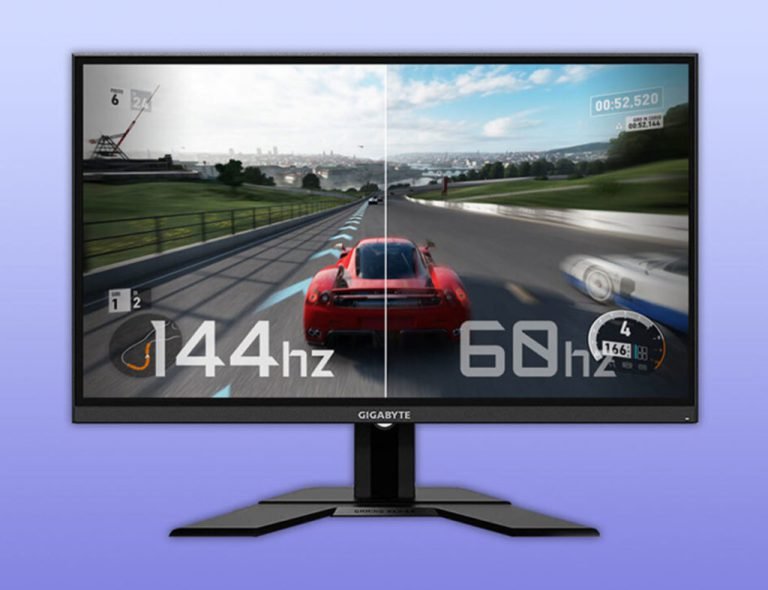
Refresh rate appears in monitor and phone specs as 60Hz, 90Hz, 120Hz, or 144Hz. This explainer covers what it actually means, how it relates to frame rate, and why the jump from 60Hz to 120Hz feels so noticeable in practice.
CPU spec sheets throw numbers at you – 16 cores, 32 threads, 5.7 GHz boost clock. This explainer translates what those numbers mean for actual performance, when more cores help, and when clock speed matters more.
Buying a monitor is harder than it looks – resolution, panel type, refresh rate, and response time all interact with each other and with your specific use case. This guide cuts through the spec sheet to tell you what actually matters.
NFC enables Apple Pay, contactless credit cards, transit cards, and device pairing. This explainer covers how NFC works, why it requires physical proximity, and where it is used beyond just payments.
Bluetooth is in almost every device you own, but most people have no idea why it sometimes drops, why range varies so much, or what the version number on the spec sheet actually means. This explainer covers all of it.