How Bluetooth Works: Versions, Range, and Why It Sometimes Drops
Bluetooth connects your earbuds, keyboard, phone, and car stereo wirelessly. Most people use it every day without knowing what Bluetooth version they are using, why connections drop in specific places, or what “aptX” and “AAC” mean on a speaker spec sheet. This explainer covers how Bluetooth actually works and what the spec numbers mean in practice.
The Basics: How Bluetooth Transmits Data
Bluetooth uses the 2.4 GHz ISM (Industrial, Scientific, Medical) radio band – the same frequency used by Wi-Fi, microwaves, and older cordless phones. To avoid interference with other devices using the same spectrum, Bluetooth uses frequency hopping spread spectrum (FHSS): the connection hops between 79 different channels 1,600 times per second, effectively avoiding sustained interference with any single channel.
When two Bluetooth devices pair for the first time, they exchange security keys and establish a “piconet” – a small network where one device acts as master and the other as slave. The master device controls the timing and frequency hopping pattern. You can have up to seven active slave devices in a piconet (useful for keyboards + mice + headphones all connected to one laptop).
Bluetooth Versions: What Actually Changed
Bluetooth specifications are maintained by the Bluetooth Special Interest Group (SIG) and release roughly every two to three years. Here is what each version relevant to consumer devices actually changed:
Bluetooth 4.0 and 4.2: Introduced Low Energy (BLE)
Bluetooth 4.0 introduced Bluetooth Low Energy (BLE) – a separate mode designed for devices that transmit small amounts of data infrequently, like fitness trackers, heart rate monitors, smartwatch sensors, and IoT devices. BLE devices can run on a coin cell battery for months or years. Classic Bluetooth (used for audio) and BLE coexist in the same 4.x specification – this is called “Bluetooth Smart Ready” in marketing material. Your phone supports both simultaneously.
Bluetooth 5.0 and 5.1: Longer Range, Higher Speed
Bluetooth 5.0 doubled the bandwidth of BLE from 1 Mbps to 2 Mbps and quadrupled the range (theoretical range to 240 meters outdoors, though real-world indoor range is 30-80 meters depending on walls and interference). It also added support for simultaneous audio broadcasting to multiple devices. Bluetooth 5.1 added direction finding – centimeter-level location accuracy for asset tracking tags like AirTags (which use BLE 5.0 with Apple’s U1 chip).
Bluetooth 5.2 and 5.3: LE Audio and Auracast
Bluetooth 5.2 introduced LE Audio, a new audio standard built on BLE rather than Classic Bluetooth. LE Audio uses the LC3 codec (Low Complexity Communications Codec) which delivers better audio quality at lower bitrates than the older SBC codec – meaning your earbuds can sound better while consuming less battery. It also enables Auracast broadcast audio – a feature that lets one device broadcast audio to an unlimited number of nearby receivers simultaneously. The practical use cases: hearing loops in public venues, sharing audio with a friend without unplugging earbuds, and airport/cinema audio on personal devices.
Bluetooth 5.4: Released 2023
Bluetooth 5.4 adds Periodic Advertising with Responses (PAwR) and Electronic Shelf Labels (ESL) – features primarily targeted at retail and IoT applications rather than consumer audio. If your earbuds support Auracast (Bluetooth 5.2+), you have the most relevant consumer Bluetooth feature of the current generation.
Audio Codecs: SBC, AAC, aptX, and LDAC
Bluetooth audio is compressed before transmission – the codec determines how well it sounds. From worst to best:
- SBC (Subband Coding): The mandatory baseline codec – every Bluetooth audio device supports it. Quality is adequate but compressed. Bitrate is typically 192-320 kbps. If no better codec is available, SBC is the fallback.
- AAC (Advanced Audio Coding): The codec used by Apple devices – iPhones and Macs prefer AAC over SBC when both devices support it. Quality is noticeably better than SBC at equivalent bitrates. AirPods and most Apple-compatible earbuds support AAC.
- aptX and aptX HD (Qualcomm): Qualcomm’s proprietary codec, common on Android phones with Qualcomm chipsets and many earbuds. aptX targets 352 kbps, aptX HD reaches 576 kbps. Better audio quality than AAC in controlled conditions, though the difference is subtle.
- LDAC (Sony): The highest-bitrate standard Bluetooth audio codec at up to 990 kbps – high enough for lossless-adjacent audio quality. Supported by Android 8.0+ natively and Sony earbuds and headphones. Both the phone and headphones must support LDAC for it to be used; connecting an LDAC headphone to an iPhone falls back to AAC.
- LC3 (LE Audio): The codec for the new LE Audio standard – delivers AAC-equivalent or better quality at lower bitrates (64-196 kbps), extending battery life in devices that adopt Bluetooth 5.2 LE Audio.
Why Bluetooth Drops Connections
Bluetooth connections drop or stutter for a few common reasons:
- 2.4 GHz congestion: Wi-Fi (especially Wi-Fi 2.4 GHz) and Bluetooth share the same frequency band. A crowded Wi-Fi environment – an apartment building, conference center, airport – can cause Bluetooth stutters. Switching your Wi-Fi router and devices to 5 GHz or 6 GHz reduces this interference.
- Physical obstruction: The human body absorbs 2.4 GHz radio waves significantly. Putting your phone in a pants pocket on the opposite side from your earbuds places your body between the two devices, degrading the connection. Pocket placement matters more than people expect.
- Distance and walls: Bluetooth’s rated range assumes open space. Through multiple walls with metal studs, range drops dramatically. The Bluetooth connection between your phone in one room and a speaker in another may cut out where line-of-sight would work fine.
- Low battery: Both transmit and receive power drop as battery depletes. A device at 10% battery has a shorter effective range than the same device at 80%.
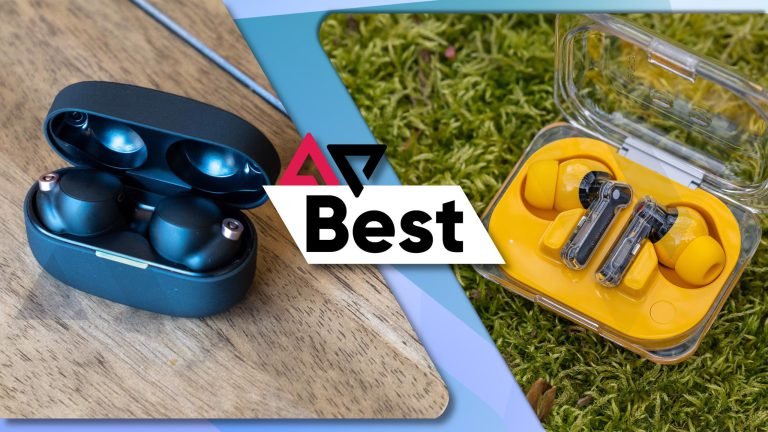
For a look at how Bluetooth versions compare in wireless earbuds specifically, see our best wireless earbuds guide which notes codec support and Bluetooth version for each recommendation.